सीखने के लिए तैयार हैं?
अपने शैक्षणिक लक्ष्यों को प्राप्त करने की दिशा में पहला कदम उठाएँ। चाहे आप परीक्षा की तैयारी कर रहे हों या अपने ज्ञान का विस्तार कर रहे हों, शुरुआत बस एक क्लिक दूर है। आज ही हमसे जुड़ें और अपनी पूरी क्षमता को अनलॉक करें।
Utkarsh Classes
Admission office
Above Arora Namkeen
Jalori Gate circle,
Jodhpur (Raj.), 342005
support@utkarsh.com
+91-9116691119, +91-9829213213
आरंभ करें


सीखने के साधन
Teaching Exams
Rajasthan Govt Exams
Central Govt Exams
Civil Services Exams
Nursing Exams
School Tuitions
Other State Govt Exams
Agriculture Exams
College Entrance Exams
Miscellaneous Exams
UC Skills

© 2026 उत्कर्ष क्लासेज एंड एडुटेक प्राइवेट लिमिटेड सभी अधिकार सुरक्षित
होम

National Current Affairs
Transport
India to Mandate Automatic Emergency Braking in Cars by Oct. 2030
Add as a preferred source on Google
Updated: 22 Oct 2026
3 Min Read
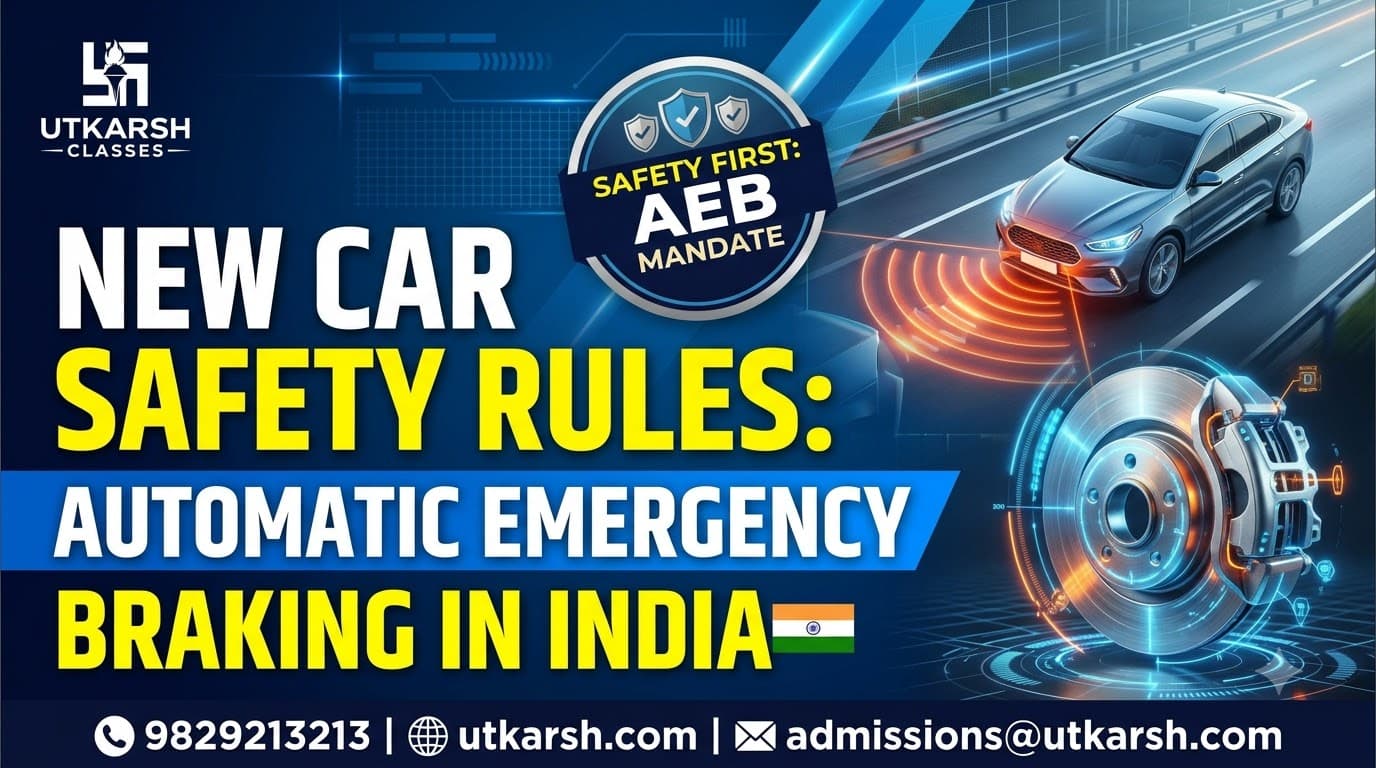
Government of India plans to mandate Advanced Emergency Braking Systems (AEBS) across all new passenger cars starting in October 2030. The Ministry of Road Transport and Highways aims to enhance road safety and significantly decrease highway fatalities.
This policy shift accelerates the rollout of Advanced Driver Assistance Systems (ADAS) across India's automotive sector. According to news reports, the ministry will soon issue a draft notification detailing phased compliance schedules for automakers.
An Advanced Emergency Braking System (AEBS) is an active driver-assist safety technology designed to prevent crashes or mitigate impact speed.
The system uses forward-facing radar sensors, optical cameras, and electronic control units to monitor traffic ahead. When the technology detects an imminent collision risk, it issues visual and auditory warnings. If the driver does not react immediately, AEBS overrides human input to automatically apply maximum braking force.
The central government plans a two-stage rollout strategy to allow carmakers sufficient lead time to re-engineer vehicle platforms and localized supply chains.
|
Vehicle Category |
Proposed Mandatory Deadline |
|
All Brand-New Car Models Introduced to Market |
October 2030 |
|
Existing Car Models Remaining in Production |
October 2032 |
AEBS operates as a core module within broader Advanced Driver Assistance Systems (ADAS). Modern vehicles integrate software algorithms and hardware sensors to support safer driving decisions.
India records significant annual road fatalities, largely caused by human error, delayed braking, and sudden traffic disruption. Mandating AEBS addresses critical safety vulnerabilities across highways and congested urban streets.
The upcoming draft notification will establish clear technical standards and sensor testing protocols. While integrating radar and camera hardware may marginally increase entry-level vehicle prices, mass production will lower technology costs over time.
AEBS serves as a supportive safety net, but it does not replace human responsibility. Drivers must remain alert and observe traffic regulations at all times.
लेखक के बारे में

Girish Kumar
Current Affairs Content Writer
Girish Kumar is a current affairs content writer at Utkarsh Classes, with a decade of experience covering diverse contemporary issues. He develops high-quality study material for various competitive examinations, including UPSC, PSC, Bank PO etc.

Frequently asked questions

अपने नज़दीकी उत्कर्ष क्लासेज के ऑफलाइन सेंटर पर आज ही विजिट करें।

Vijayadashami Offer Is LIVE!
Get 25% EXTRA OFF on All Online Courses. Use Code WEB25 to Unlock Your Festive Discount!