Ready to learn?
Take the first step toward achieving your educational goals. Whether you’re preparing for exams or expanding your knowledge, getting started is just a click away. Join us today and unlock your full potential
Utkarsh Classes
Admission office
Above Arora Namkeen
Jalori Gate circle,
Jodhpur (Raj.), 342005
support@utkarsh.com
+91-9116691119, +91-9829213213
Support
Get Started


Learning Resources
Rajasthan Govt Exams
Central Govt Exams
Civil Services Exams
Nursing Exams
School Tuitions
Other State Govt Exams
Agriculture Exams
College Entrance Exams
Miscellaneous Exams

© 2026 Utkarsh Classes & Edutech Pvt. Ltd. All Rights Reserved
Add as a preferred source on Google
Updated: 26 Oct 2026
3 Min Read
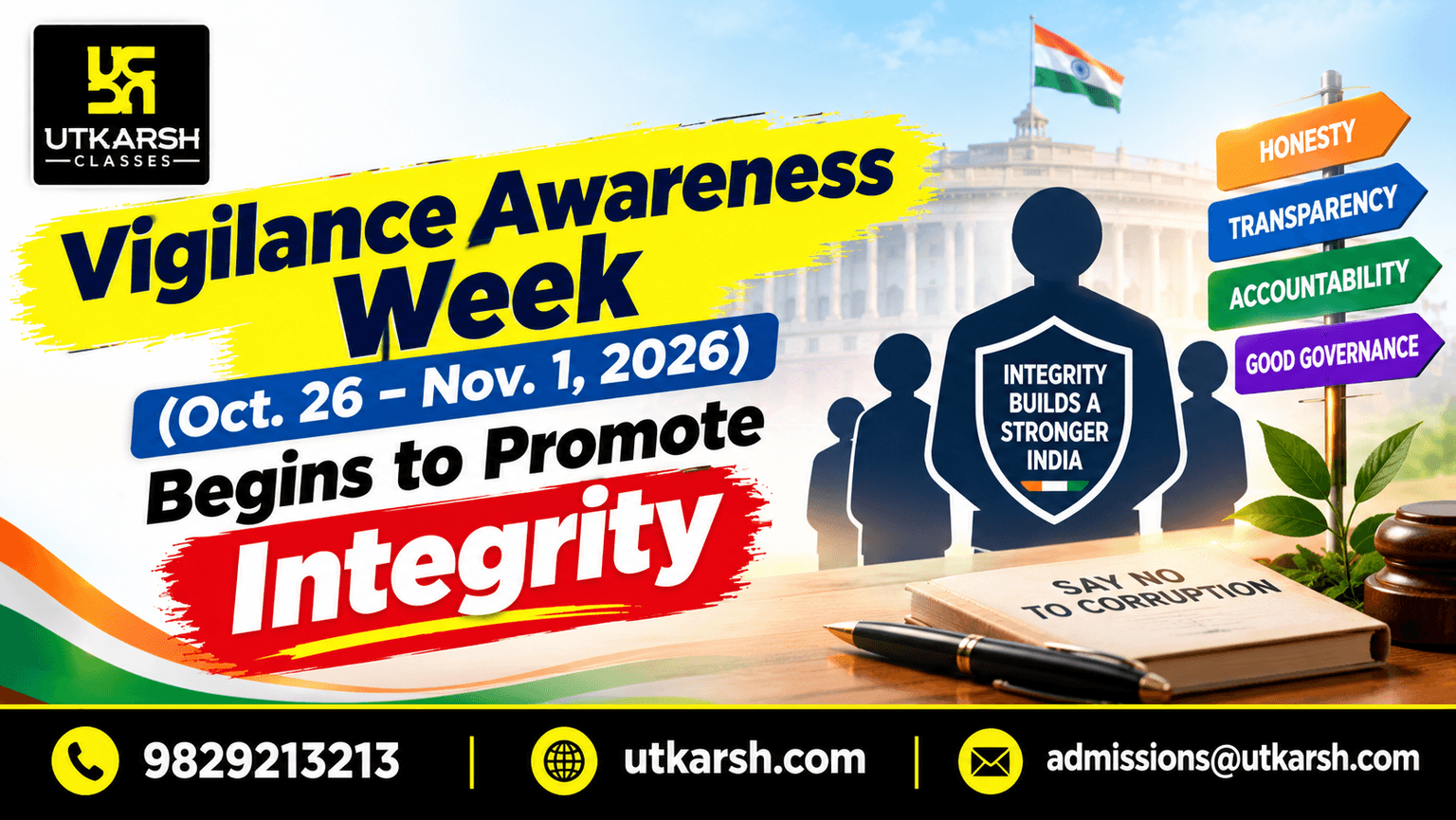
India marks the commencement of Vigilance Awareness Week (October 26–November 1, 2026) across government departments, public sector undertakings (PSUs), financial institutions, and civil society organizations. The annual anti-corruption campaign drives transparency, ethical governance, and accountability in public administration.
This year's official theme, “सत्यनिष्ठा से समृद्धि – Probity for Prosperity,” emphasizes the fundamental connection between institutional honesty and national socio-economic progress.

Public servants initiate the observance by taking the Integrity Pledge across all Union ministries, state secretariats, public sector banks, and government offices nationwide.

Vigilance Awareness Week reinforces preventive, punitive, and participative vigilance across public agencies through several core operational targets:
Aspirants must differentiate between India's key anti-corruption bodies:
|
Statutory Institution |
Governing Legislation |
Primary Regulatory Function |
|
Central Vigilance Commission (CVC) |
CVC Act, 2003 |
Supervises vigilance administration across Union Ministries and PSUs. |
|
Central Bureau of Investigation (CBI) |
DSPE Act, 1946 |
Investigates complex bribery, economic offences, and corruption cases. |
|
Lokpal of India |
Lokpal & Lokayuktas Act, 2013 |
Statutory ombudsman investigating allegations against high public functionaries. |
Eradicating administrative malpractices requires continuous civic participation alongside state action. Citizens support transparent governance by refusing illicit demands, using online public services, utilizing the Right to Information (RTI) Act, and reporting infractions to competent oversight authorities.
Through the Integrity Pledge, public employees re-dedicate themselves to serving citizens impartially and safeguarding public assets.
|
Parameter / Metric |
Official Details |
|
Nodal Oversight Body |
Central Vigilance Commission (CVC) |
|
Official Theme |
“सत्यनिष्ठा से समृद्धि – Probity for Prosperity” |
|
Statutory Basis of CVC |
Central Vigilance Commission Act, 2003 |
|
Recommending Committee |
K. Santhanam Committee (1962–1964) |
|
Historical Alignment |
Birth Anniversary of Sardar Vallabhbhai Patel (October 31) |
|
First Step of Observance |
Integrity Pledge administration across institutions |
About the author

Girish Kumar
Current Affairs Content Writer
Girish Kumar is a current affairs content writer at Utkarsh Classes, with a decade of experience covering diverse contemporary issues. He develops high-quality study material for various competitive examinations, including UPSC, PSC, Bank PO etc.

Frequently asked questions

Visit Utkarsh Classes Offline Centre Near You.

Download All Exam PYQ PDFS Free!!!
Previous 5+ year Questions Papers se karen damdar practice