Ready to learn?
Take the first step toward achieving your educational goals. Whether you’re preparing for exams or expanding your knowledge, getting started is just a click away. Join us today and unlock your full potential
Utkarsh Classes
Admission office
Above Arora Namkeen
Jalori Gate circle,
Jodhpur (Raj.), 342005
support@utkarsh.com
+91-9116691119, +91-9829213213
Support
Get Started


Learning Resources
Rajasthan Govt Exams
Central Govt Exams
Civil Services Exams
Nursing Exams
School Tuitions
Other State Govt Exams
Agriculture Exams
College Entrance Exams
Miscellaneous Exams

© 2026 Utkarsh Classes & Edutech Pvt. Ltd. All Rights Reserved
Home

International Current Affairs
Environment
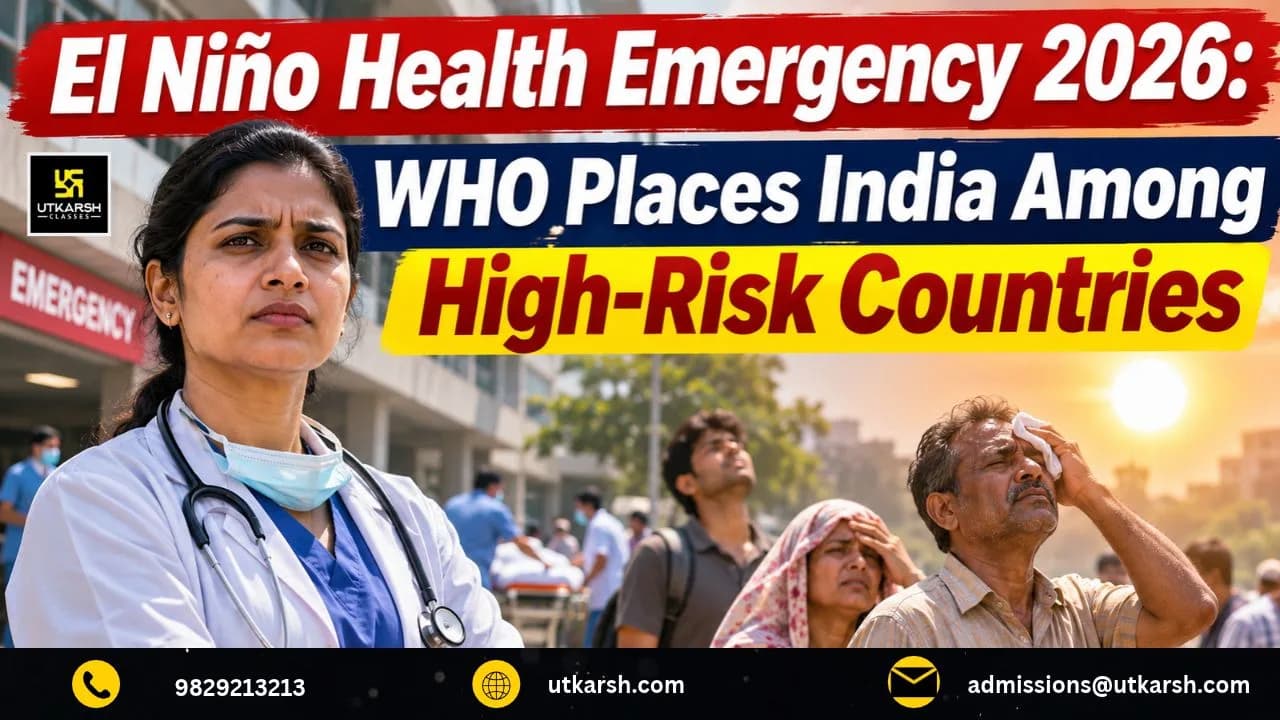
El Niño Health Emergency 2026: WHO Places India Among High-Risk Countries
Add as a preferred source on Google
Updated: 14 Nov 2026
2 Min Read
WHO’s Global Public Health Situation Analysis, published on 5 September 2026, placed these South Asian countries in the high or very high risk category:
The World Health Organization (WHO) has stepped up its global response to El Niño-related health risks by activating Grade 3, the highest level of its internal emergency-response system. In its September 2026 assessment, WHO named India among the countries facing high or very high public-health risks. Its strategic preparedness and response plan was released on 2 November 2026 and runs from October 2026 to September 2027. WHO needs about US$35 million initially, for the period October 2026 to March 2027.
Grade 3 is not the same as a Public Health Emergency of International Concern. It only shows how seriously WHO is treating the situation internally.
WHO has linked the changing temperature and rainfall patterns to several health concerns that could affect India:
El Niño is a natural climate pattern in which surface waters of the central and eastern tropical Pacific Ocean become warmer than usual. This changes wind and rainfall patterns across the world. Some regions face long dry spells, extreme heat and drought, while others get heavy rain and floods. WHO fears these shifts could increase heat-related illness, infectious diseases, food shortages and pressure on healthcare services.
A high-risk rating does not mean every part of these countries will face a health emergency. The actual impact depends on local weather, existing health problems and how well prepared each area is.
About the author

Hardika Shekhawat
Current Affairs Content Writer
Hardika is a current affairs content writer at Utkarsh Classes with 3 years of experience in academic content writing. She creates clear, exam-ready current affairs articles for UPSC, SSC, RAS, Banking, Railway and State PCS aspirants.

Frequently asked questions

Visit Utkarsh Classes Offline Centre Near You.