Ready to learn?
Take the first step toward achieving your educational goals. Whether you’re preparing for exams or expanding your knowledge, getting started is just a click away. Join us today and unlock your full potential
Utkarsh Classes
Admission office
Above Arora Namkeen
Jalori Gate circle,
Jodhpur (Raj.), 342005
support@utkarsh.com
+91-9116691119, +91-9829213213
Support
Get Started


Learning Resources
Rajasthan Govt Exams
Central Govt Exams
Civil Services Exams
Nursing Exams
School Tuitions
Other State Govt Exams
Agriculture Exams
College Entrance Exams
Miscellaneous Exams

© 2026 Utkarsh Classes & Edutech Pvt. Ltd. All Rights Reserved
Home

International Current Affairs
Environment
COP31 Climate Talks Collapse Over Fossil Fuel Deal Dispute
Add as a preferred source on Google
COP31 climate talks in Antalya collapse after the EU and other nations reject a deal that omits fossil fuels, ending the longest UN summit without a pact.
Updated: 23 Nov 2026
4 Min Read
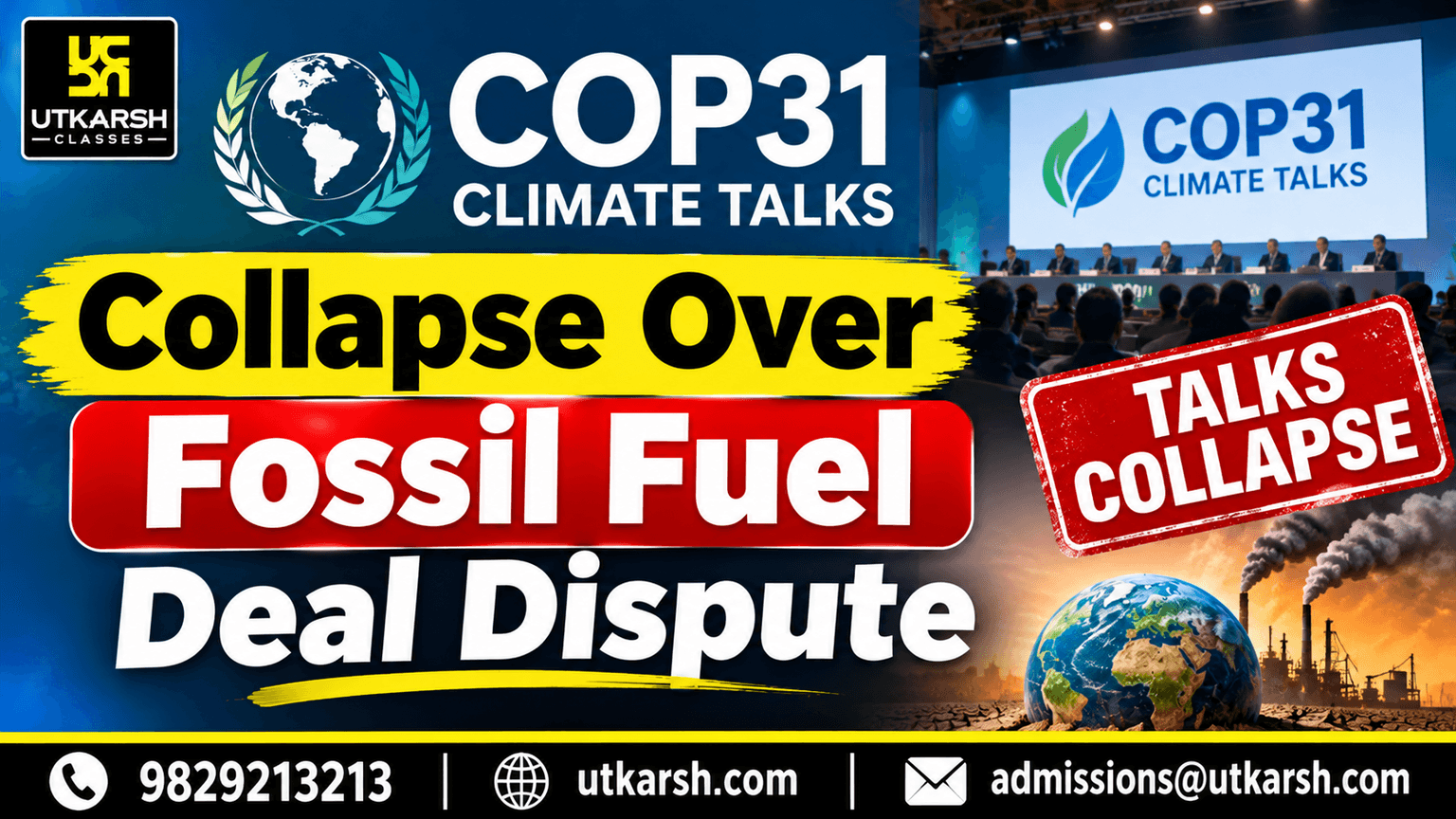
The United Nations Climate Change Conference (COP31) in Antalya, Türkiye, has collapsed without an overarching agreement. Two weeks of intense diplomacy and nearly 48 hours of overtime negotiations failed to produce a consensus. For the first time since Copenhagen in 2009, a UN climate summit ended without a main cover decision.
The European Union (EU), the United Kingdom, and several developing nations rejected the final text proposed by the joint Turkish-Australian presidency. They argued that omitting explicit commitments on fossil fuels fatally weakened global climate action.
Scheduled to run from November 9 to 20, 2026, COP31 dragged on for two extra days as diplomats scrambled to bridge deep divides. This 48-hour overtime extension made the Antalya gathering the longest UN climate summit on record.
Despite marathon sessions, governments failed to adopt the cover decision—the primary political text that sets the summit's strategic direction. Deep rifts over energy transition timelines and financial obligations for developing economies proved impossible to resolve.
Burning coal, oil, and natural gas releases heat-trapping greenhouse gases that drive global warming. Consequently, phasing out fossil fuels stood at the centre of the Antalya deadlock.
While an early draft released on November 16 called for an immediate transition away from fossil fuels in energy systems, subsequent revisions stripped out that language. Saudi Arabia and other major oil-producing nations lobbied fiercely against naming fossil fuels in the final document. By November 19, the text contained no explicit mention of coal, oil, or gas, referring only vaguely to an "irreversible global transition towards low greenhouse gas emissions".
Led by the European Union, a broad coalition of climate-ambitious and climate-vulnerable nations refused to endorse the watered-down compromise. EU negotiators insisted that any credible climate pact must explicitly target fossil fuel phaseouts. Accepting a text silent on the primary driver of climate change, they warned, would roll back earlier international commitments.
Alongside fossil fuels, disputes over climate finance crippled the talks. Developing nations require trillions of dollars to cut emissions, adapt to extreme weather, and manage climate disasters.
However, negotiators failed to agree on clear financial targets. Draft proposals dropped an earlier $120 billion adaptation finance target and offered a vague call to triple adaptation funding by 2035 without an agreed baseline. Developing countries argued that wealthy nations were diluting their historical responsibilities while shifting mitigation burdens onto the Global South.
COP31 operated under a unique dual-presidency model. Türkiye’s Environment Minister Murat Kurum served as COP31 President, while Australia’s Climate Change Minister Chris Bowen presided over the formal negotiations.
Both leaders circulated multiple compromise drafts to balance the competing demands of petrostates and climate-vulnerable nations. Ultimately, their final text satisfied neither side, leaving the presidency unable to gavel through a consensus agreement.
COP31 marks the 31st Conference of the Parties to the United Nations Framework Convention on Climate Change (UNFCCC). Under this global treaty, member states gather annually to:
Because UNFCCC rules require consensus among all participating nations, objections from key blocs can halt an overarching decision.
UN Secretary-General António Guterres called the collapse deeply disappointing, warning that while negotiators lacked consensus, there is "no ambiguity in the science". Rebuilding trust between wealthy polluters, fossil fuel exporters, and developing nations remains urgent before talks resume.
About the author

Girish Kumar
Current Affairs Content Writer
Girish Kumar is a current affairs content writer at Utkarsh Classes, with a decade of experience covering diverse contemporary issues. He develops high-quality study material for various competitive examinations, including UPSC, PSC, Bank PO etc.

Latest Current Affairs
Frequently asked questions

Visit Utkarsh Classes Offline Centre Near You.