Ready to learn?
Take the first step toward achieving your educational goals. Whether you’re preparing for exams or expanding your knowledge, getting started is just a click away. Join us today and unlock your full potential
Utkarsh Classes
Admission office
Above Arora Namkeen
Jalori Gate circle,
Jodhpur (Raj.), 342005
support@utkarsh.com
+91-9116691119, +91-9829213213
Support
Get Started


Learning Resources
Rajasthan Govt Exams
Central Govt Exams
Civil Services Exams
Nursing Exams
School Tuitions
Other State Govt Exams
Agriculture Exams
College Entrance Exams
Miscellaneous Exams

© 2026 Utkarsh Classes & Edutech Pvt. Ltd. All Rights Reserved
Add as a preferred source on Google
Updated: 28 Mar 2026
18 Min Read
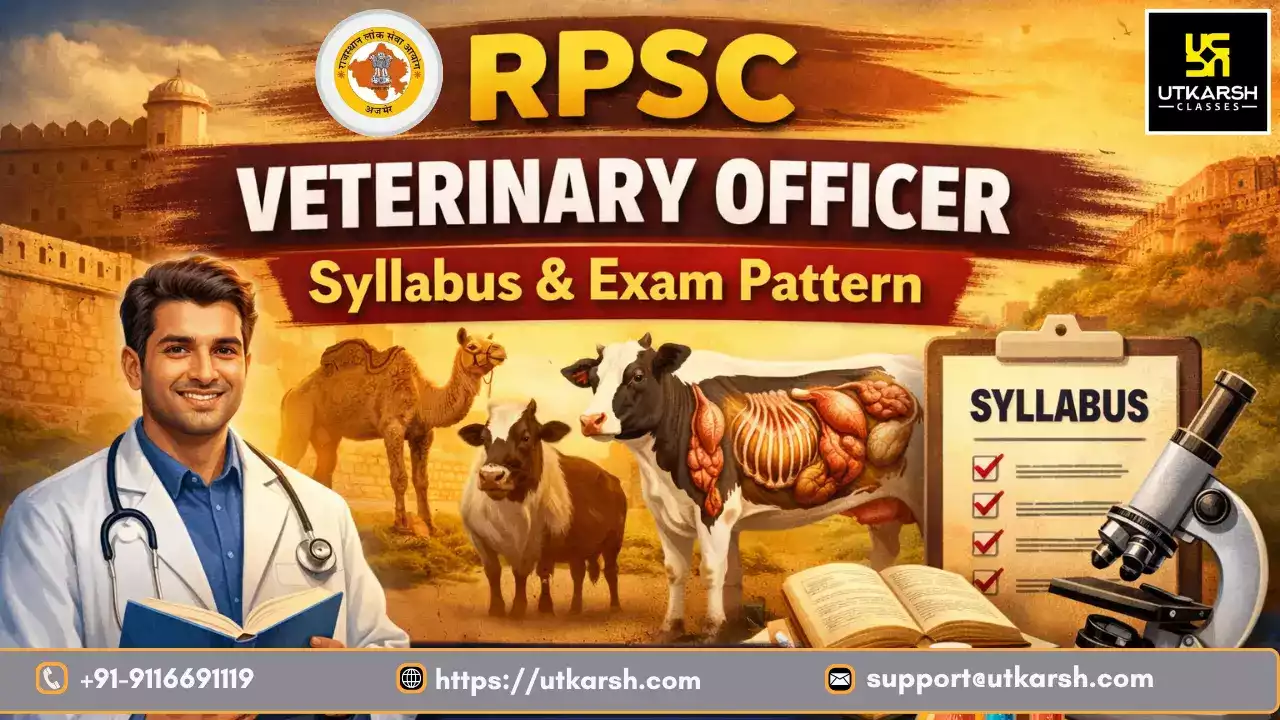
RPSC Veterinary Officer Exam is a state-level competitive exam conducted by the Rajasthan Public Service Commission (RPSC). If you are the one who has a Bachelor’s degree in Veterinary Science and Animal Husbandry or its equivalent, it’s a great opportunity to join the Animal Husbandry Department of Rajasthan as a Veterinary Officer. It is a competitive examination aimed at recruiting qualified veterinarians who will work in government livestock services.
RPSC Veterinary Officer Recruitment is conducted as part of the state’s effort to strengthen livestock health infrastructure and ensure effective delivery of veterinary services across rural and urban areas. Candidates who will clear the RPSC Veterinary Officer Written Exam will be selected for the Veterinary Officer positions and are responsible for treating and preventing animal diseases, conducting vaccination drives, improving livestock productivity, implementing government schemes related to dairy, poultry, and livestock, along with work in rural and field areas. Candidates selected for the Veterinary Officer post will be appointed in Pay Matrix Level 14, with a grade pay of Rs. 5,400, as per the Rajasthan government service rules.
Candidates who are planning to begin the RPSC Veterinary Officer Exam Preparation should take a moment and scroll down to read this article, as we are detailing the RPSC Veterinary Officer Syllabus, Exam Pattern, Selection Process, along with the Preparation Tips for you. By reading this, you can systematically plan your Rajasthan Veterinary Officer Exam Preparation.
The Rajasthan Public Service Commission (RPSC) has revised the selection procedure for the Rajasthan Veterinary Officer Recruitment 2025. As per the latest update, candidates will now be selected solely on the basis of a written examination. Earlier, the recruitment process included two stages i.e. Written Examination followed by an Interview, but the interview stage has now been removed.
This change simplifies the recruitment process and places complete emphasis on candidates’ performance in the written test. Therefore, aspirants must focus on scoring well in the exam to secure their selection. The written examination will be conducted in offline mode using an OMR sheet. Candidates will be required to mark their answers carefully, as only correctly filled responses will be evaluated.
RPSC Veterinary Officer Exam Details are provided in the table below to provide you with a concise overview of the exam. This will help you to check all the important information regarding the exam, which you should know before appearing for it:-
|
RPSC Veterinary Officer Exam Overview |
|
|
Exam Conducting Body |
Rajasthan Public Service Commission (RPSC) |
|
Exam Name |
RPSC Veterinary Officer Exam |
|
Department |
Animal Husbandry Department, Rajasthan |
|
Age Limit |
20 to 40 years (Relaxation provided to special categories) |
|
Educational Qualification |
Bachelor's Degree in Veterinary Science and Animal Husbandry |
|
Exam Mode |
Offline (OMR-Based) |
|
Job Location |
Rajasthan |
|
Selection Process |
Written Exam |
The RPSC Veterinary Officer Exam is a state-level, highly competitive examination which is conducted by the Rajasthan Public Service Commission (RPSC). The RPSC Veterinary Officer Exam Pattern is an essential aspect that every candidate should understand before starting their preparation for the recruitment examination. Having a clear idea of the exam pattern will help candidates plan their preparation in a more structured and effective way.
In this section, we are providing detailed information about the RPSC Veterinary Officer Exam Pattern, which generally includes the subjects covered, total number of questions, maximum marks, marking scheme, and exam duration. Candidates preparing for the RPSC Veterinary Officer Exam are advised to go through the exam pattern carefully to align their preparation strategy accordingly:-
|
RPSC Veterinary Officer Exam Pattern |
||||
|
Part |
Subject |
No. of Questions |
Marks |
Duration |
|
A |
General Knowledge of Rajasthan |
40 |
40 |
2 hours 30 minutes |
|
B |
Concerned Subject (Veterinary Science and related topics) |
110 |
110 |
|
|
Total |
150 |
150 |
2 hours 30 minutes |
|
The RPSC Veterinary Officer Exam is typically divided into two parts, which are General Knowledge and Concerned Subjects. Those who are preparing for the RPSC Veterinary Officer Exam are advised to thoroughly prepare both sections, as the General Knowledge portion tests awareness of Rajasthan’s history, culture, geography, and current affairs, while the concerned subject evaluates domain-specific knowledge.
A thorough understanding of the subject-wise RPSC Veterinary Officer Syllabus helps aspirants identify important topics and focus areas, allowing them to streamline their preparation strategy effectively. By going through the detailed syllabus, candidates can plan their studies in a structured manner, prioritise high-weightage topics, and ensure complete coverage of all essential concepts related to veterinary science and allied subjects required to succeed in the RPSC Veterinary Officer exam.
Part A of the Rajasthan Veterinary Officer Examination is majorly focused on Rajasthan’s General Knowledge. Students must prepare themselves with an exam-oriented strategy. Since General Knowledge have a vast syllabus, cramming everything will not help you in scoring good. Check the high-weightage areas and pick topics which are actually coming in your exams. Have a look at the detailed RPSC Veterinary Officer General Knowledge Syllabus to plan your preparations smartly:-
|
General Knowledge |
|
|
Topic |
Sub Topics |
|
Language & Literature |
Dialects of the Rajasthani language, literature of the Rajasthani language and folk literature. |
|
Religious Life |
Religious communities, saints and sects in Rajasthan. Folk deities of Rajasthan. |
|
Performing Art |
Classical music and classical dance, folk music & Instruments, folk dances & drama |
|
Visual Art |
Handicrafts of Rajasthan, historical architecture like forts, palaces and temples. |
|
Tradition |
Costumes and ornaments, social customs of Rajasthan. Festivals and fairs in Rajasthan. Various tribes and their customs. Historical Sites and tourist places |
|
Geography of Rajasthan |
Broad physical features- Mountains, Plateaus, Plains & Desert; Major rivers and lakes; Climate, Major soil types and distribution; Major Forest types and distribution; Demographic characteristics; Dairy farming, Desertification, Droughts & Floods, Deforestation |
|
Livestock Context |
Inhabitation and home tract of various livestock breeds found across Rajasthan. Animal fairs of Rajasthan. Common wildlife species found in Rajasthan and places for their conservation |
Rajasthan Veterinary Officer Concerned Subject section carries significant weight in the examination and therefore demands special attention from candidates. A strong command of core veterinary science topics is essential to score well in this section and improve overall performance in the exam. Here we are providing you with the Unit-wise detailed RPSC Veterinary Officer Syllabus for your reference:-
|
Concerned Subject |
|
|
Topic |
Sub Topics |
|
Veterinary Anatomy, Histology and Embryology |
Anatomical structure and categorization of bones, joints, and muscles. Gross anatomy, topography and histology of different organs of digestive, respiratory, urogenital, endocrine, cardiovascular, and nervous systems of domestic animals and fowl. Study of basic tissues i.e. epithelial, connective, muscular and nervous tissues, blood and bone marrow. Introduction to embryology. Different germ layers and their derivatives. Formation and growth of organs across different body systems, including the sense organs. |
|
Veterinary Physiology and Biochemistry |
Formation and physiological functions of blood. Cardiac cycle. Physiological characteristics of monogastric and polygastric digestive systems. Physiology of respiration in animals and birds. Regulation of growth. Thermoregulation in farm animals and birds. Structure of biological membranes and transport across membranes. Enzymes. Carbohydrate, fat and protein metabolism. Ammonia transport and urea cycle. |
|
Veterinary Microbiology, Immunology and Biotechnology |
Introduction, classification, nomenclature and general properties of bacteria, viruses and fungi. Pathogenicity, virulence, bacteraemia, septicaemia and toxaemia. Bacterial genetics, plasmids and antibiotic resistance. Study of isolation methods, culture and growth patterns, morphology, biochemical and antigenic properties, along with diseases caused by bacteria, viruses, and fungi in livestock and poultry. Fundamental concepts of recombinant DNA technology, molecular biology, and biotechnological techniques. History of Immunology, Types of Immunity, Antigens, Antibody. Serological reactions, Complement system, Cytokines, Hypersensitivity, Autoimmunity, Immunotolerance. |
|
Veterinary Pathology and Disease Diagnosis |
Introduction, causes of disease, mechanism of cell injury, cellular degenerations, haemodynamic disorders, disturbances of growth, pigmentations. Inflammation, classification, various cell types and their functions, chemical mediators, cardinal signs, systemic effects. Wound healing. Pathology of autoimmune diseases. General characteristics and classification of neoplasms. Post-mortem techniques, Post-mortem changes, collection, preservation and despatch of morbid materials for diagnosis. Haematology, anticoagulants, interpretations of blood tests, urinalysis, biopsy, cytology. Pathology of diseases affecting various systems. Pathology of various bacterial, viral, fungal, mycoplasmal, parasitic and prion diseases of animals and poultry. Pathological changes in nutritional and metabolic diseases and heavy metal toxicities. Pathology of important diseases of Laboratory and Wild animals. |
|
Veterinary Parasitology and Parasite Management |
Parasites of domestic animals, poultry and wild animals (morphology, taxonomy, biology, life cycles, host–parasite interactions, epidemiology, pathogenesis, zoonotic importance, diagnosis, management and integrated control measures), protozoa, helminths (trematodes, cestodes, nematodes) and arthropods of veterinary importance. Immunity against parasitic infections and infestations, antiparasitic drug resistance. Collection, preservation and examination of parasitic specimens from animals and the environment, preparation of smears, faecal examination, larval culture and identification of eggs, larvae, adult worms and arthropods using serological, microscopic, and molecular techniques, comprehensive parasite control strategies for livestock and companion animals. |
|
Veterinary Pharmacology, Toxicology and Chemotherapy |
General Pharmacology (drug sources, nomenclature, pharmacokinetics, pharmacodynamics, adverse drug reactions, drug interactions), autacoids, drugs acting on the autonomic, somatic, and central nervous systems, and various body systems (digestive, cardiovascular, respiratory, urogenital, endocrine, and skin). Veterinary Chemotherapy (antibacterials, antiprotozoals, anthelmintics, antivirals, antifungals, antitubercular drugs, ectoparasiticides, antiseptics, anticancer agents, disinfectants), indigenous medicinal plants, Veterinary Toxicology (classification of toxicants, environmental pollutants, diagnosis and treatment of poisoning, plants, agrochemicals, toxicity from metals, drugs, fungal/bacterial/plant/ animal toxins, food additives, venoms, residues of drugs and agrochemicals, and radiation hazards). |
|
Veterinary Public Health and Epidemiology |
Veterinarians in public health, one health concept, concepts, general principles, and applied aspects of milk, meat and environmental hygiene, food safety and public health. Concepts, principles and applied aspects of Veterinary epidemiology, zoonoses and zoonotic diseases, Emerging, re-emerging diseases, occupational health hazards, foodborne infections and intoxications. |
|
Veterinary Surgery and Radiology |
Basic principles of surgery. Types of wounds and wound healing. Sterilisation and various methods of sterilisation. Methods of haemostasis. Types of suture techniques, suture materials and their use. Basic Surgical affections- abscess, hematoma, cysts, tumours, necroses, and burns and their treatment. Fractures its classification and general principles of fracture repair. Application of external and internal immobilisation for different bone fractures. Common anaesthetic and anaesthesia techniques used in wild and domestic animals. Anaesthetic monitoring, emergencies. Anaesthetic toxicity and its reversal. Local anaesthetic techniques and their indications. Radiation hazards and safety. Radiographic quality and factors affecting it. Contrast radiography. Introduction to advanced imaging tools. Types of lameness in domestic animals. Common surgical problems of the head, neck, thorax and abdomen in domestic animals. Advances in surgery: laparoscopic surgery |
|
Veterinary Clinical Medicine and Animal Welfare |
Concepts of diagnosis, differential diagnosis, treatment, prevention, control, prognosis, etc., anamnesis, clinical procedures, modern diagnostic techniques, methods of clinical and special examination of animals, including various body parts/organs. General systemic states, disease monitoring and surveillance, population health. Collection, dispatch, preservation, processing, examination of clinical samples, various screening and diagnostic tests. Aetiology, clinical manifestations, diagnosis, differential diagnosis, treatment, prevention and control of: • General and systemic diseases of animals and birds- Diseases of digestive, respiratory, cardiovascular, uro-genital, nervous, haemopoietic, lymphatic and musculoskeletal system, sense organs and skin diseases. • Metabolic disorders/production/endocrine and deficiency diseases of animals and birds. • Infectious diseases of animals and birds- bacterial, fungal, rickettsial, viral and parasitic. Emergency medicine and critical care, clinical management of common poisonings, Alternative/integrated/ethno-veterinary medicine, Hospital setup, laboratory diagnosis and record keeping. Veterinary jurisprudence, ethics and animal welfare-Veterinary-legal aspects, Rules, regulations and laws of animal health, welfare and management, Laws relating to poisons and adulteration of drugs, Livestock importation act, animal insurance, Indian Veterinary Council Act, 1984, Code of conduct and Ethics for veterinarians, various aspects of animal welfare. |
|
Veterinary Gynaecology and Reproductive Physiology |
Reproductive physiology and role of hormones. Oestrous cycle across different animal species along with the identification of heat symptoms. Cystic ovarian disease, Methods of pregnancy diagnosis in different species, MRP. Infertility in animals. Parturition in animals, Diseases and accidents during gestation. Causes of dystocia in different animal species and their correction. Postpartum complications in different animal species. Teratology. Methods for semen collection, processing, and the application of artificial insemination in animals. Advanced reproductive techniques, like Oestrus synchronisation, ETT, IVF, GIFT, SCNT and Cloning etc. |
|
Livestock Production and Management |
Livestock production systems of different agroclimatic zones. Physical structure and identification of animals, along with the study of teeth and methods for determining age. Transport of animals by different means. Common vices of animals, their prevention & care. Organic livestock production. Housing for various livestock species. Important breeds of livestock, poultry and pet animals. General management of farm animals, equines and swine. Present scenario of the Indian poultry industry. Commercial poultry production and Hatchery management. Marketing of animals and avian products, including value addition. Concepts of biosecurity, animal behaviour and welfare, and economic traits of farm animals and poultry. Integrated farming system. |
|
Animal Genetics and Breeding |
History of genetics and animal breeding. Cell division and gametogenesis. Classical Mendelian genetics. Population genetics. Quantitative genetics. Cytogenetics. Basics of molecular genetics and techniques. Mutation and chromosomal aberrations. Types, bases and methods of selection. Mating systems- types, effects and uses. Concept of nuclear breeding schemes. Sire evaluation. Development of new breeds and strains. Conservation of germplasm. Current livestock and poultry breeding programmes in the state and country. |
|
Animal Nutrition and Feed Management |
Importance of nutrients in animal production and health. Common feeds and fodder resources of Rajasthan, their classification, availability, and nutritional value. Measures of food energy. Proximate and detergent system of analysis. Protein evaluation of feeds. Methods of improving the nutritive value of low-quality roughage. Processing of concentrates and roughages. Methods for preparing, storing, and preserving livestock feed and fodder, along with the identification of harmful natural components and common adulterants present in them. Feed additives, supplements and growth stimulants in the ration of livestock and poultry. Measurement of digestibility and factors affecting it. Feeding standards. Balanced ratio. Nutritional requirements of farm animals, laboratory animals and poultry for maintenance and production. Formulation of ratios of livestock and poultry for different phases of growth and production. |
|
Dairy Technology and Meat Industry |
Milk Industry in India. Composition, nutritional value, and physicochemical properties of milk. Milk processing plant and its management. Organic milk products. Legal and BIS standards of Milk and Milk products. management of abattoirs, BIS Standards on organisation and layout of abattoirs. HACCP concept in abattoir management. Importance of wool, fur, pelt and speciality fibres processing. Retrospect and prospect of the meat industry in India. Nutritive value of meat, fraudulent substitution of meat, and preservation of meat. Physicochemical and microbiological quality of meat. Laws governing the national and international trade of meat and meat products. |
|
Veterinary Extension Education and Rural Development |
Fundamental principles of extension education, sociology, community development, and rural development. Steps in extension teaching. Characteristics and differences among communities. Operation Flood. Central and state-level agencies are concerned with livestock extension programmes. Dairy and poultry development programmes in India: completed and ongoing at the central and Rajasthan levels. Basic concepts of communication. Types and methods of communications. Livestock entrepreneurship. Livestock census and insurance schemes. |
RPSC Veterinary Officer Syllabus must be checked by the candidates before starting their exam preparation to make sure that they have a clear understanding of the exam pattern, subject-wise topics, and important areas to focus on. If you are the one who is planning to prepare for the Rajasthan Veterinary Officer Exam in the near future, then you can download the RPSC Veterinary Officer Exam Syllabus PDF by clicking on the link provided below:-
Download RPSC Veterinary Officer Exam Syllabus PDF
The Rajasthan Veterinary Officer Exam is a highly competitive exam in Rajasthan, as it attracts numerous students from Veterinary Science and Animal Husbandry feilds. Students who have the required degrees and plan to begin the Rajasthan Veterinary Officer Exam Preparation, then you are at the right place. Preparing for the RPSC Veterinary Officer Exam requires a smart blend of conceptual clarity, consistent practice, and a focused strategy. Since the exam includes both Rajasthan GK and core Veterinary Science subjects, candidates must balance their preparation between theoretical knowledge and practical understanding.
A well-structured study plan can significantly improve your chances of scoring high. Moreover, the competition level is quite high, so relying only on basic reading is not enough. Candidates should focus on revising standard textbooks, practising previous year papers, and staying updated with current developments in animal husbandry. A disciplined approach, along with regular self-assessment, will help you stay ahead in the preparation journey.
Check the RPSC Veterinary Officer Exam Preparation Tips here, which are given by our subject matter experts to help you plan your exam preparation journey in the right direction:-
|
Other Important Links for Exam Preparation |
|
About the author

Nidhi Sharma
SEO Content Writer
Nidhi Sharma is an SEO Content Writer at Utkarsh Classes with 5+ years of experience in educational content, Digital Marketing, and Teaching. She specializes in government exam updates, creating clear, accurate, and student-focused content to help aspirants stay informed and prepare confidently.

RPSC Veterinary Officer Important Updates
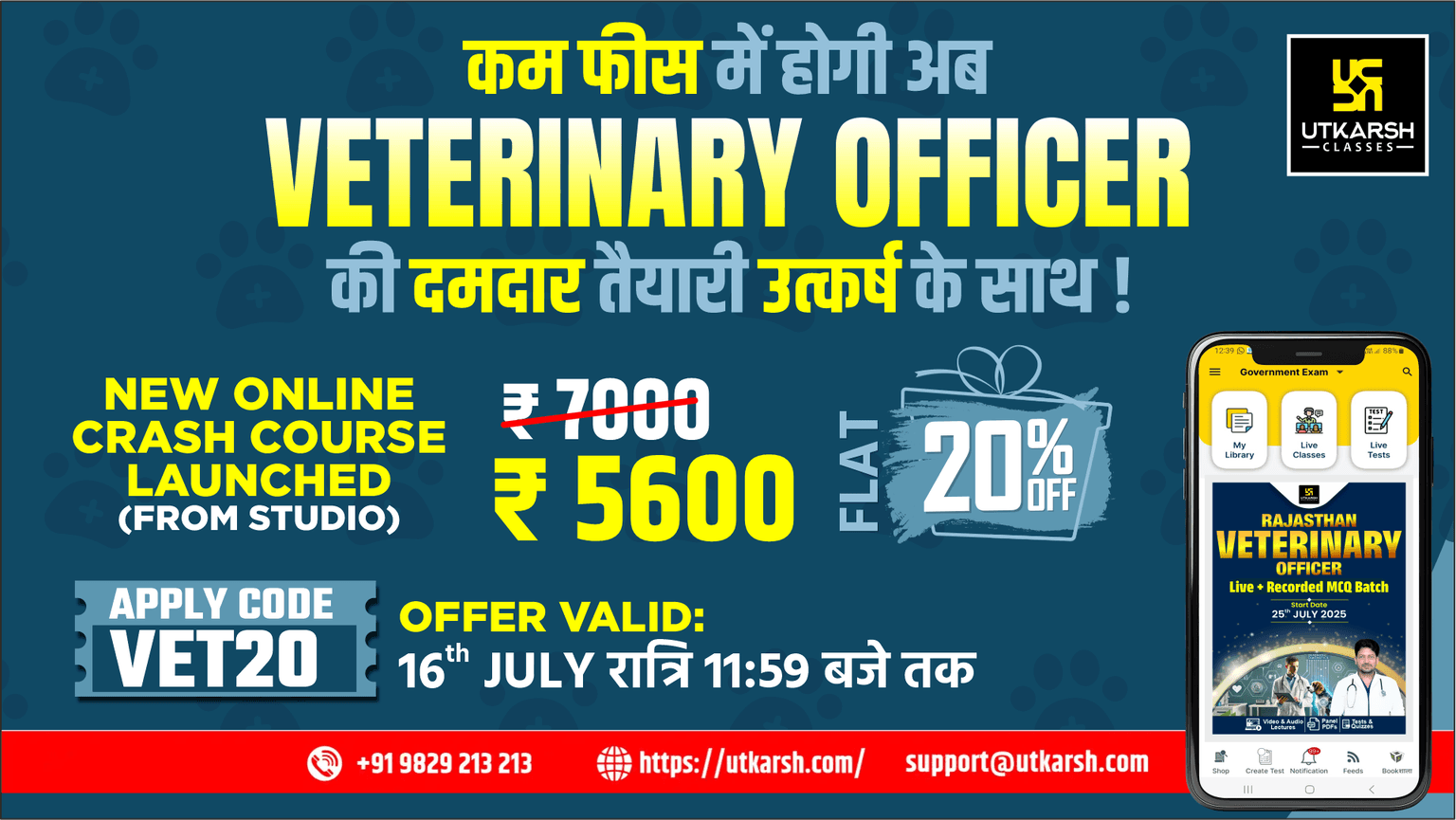
Rajasthan Veterinary Officer Batch Offer - Flat 20% OFF on Crash Course
Read More