Ready to learn?
Take the first step toward achieving your educational goals. Whether you’re preparing for exams or expanding your knowledge, getting started is just a click away. Join us today and unlock your full potential
Utkarsh Classes
Admission office
Above Arora Namkeen
Jalori Gate circle,
Jodhpur (Raj.), 342005
support@utkarsh.com
+91-9116691119, +91-9829213213
Support
Get Started


Learning Resources
Rajasthan Govt Exams
Central Govt Exams
Civil Services Exams
Nursing Exams
School Tuitions
Other State Govt Exams
Agriculture Exams
College Entrance Exams
Miscellaneous Exams

© 2026 Utkarsh Classes & Edutech Pvt. Ltd. All Rights Reserved
Home

State Current Affairs
State news
Andhra Pradesh Becomes 1st State to Introduce Circular Economy Policy
Add as a preferred source on Google
Andhra Pradesh introduces India's first State-level circular economy policy to promote recycling, waste segregation, investment and sustainable urban development.
Updated: 27 Nov 2026
6 Min Read
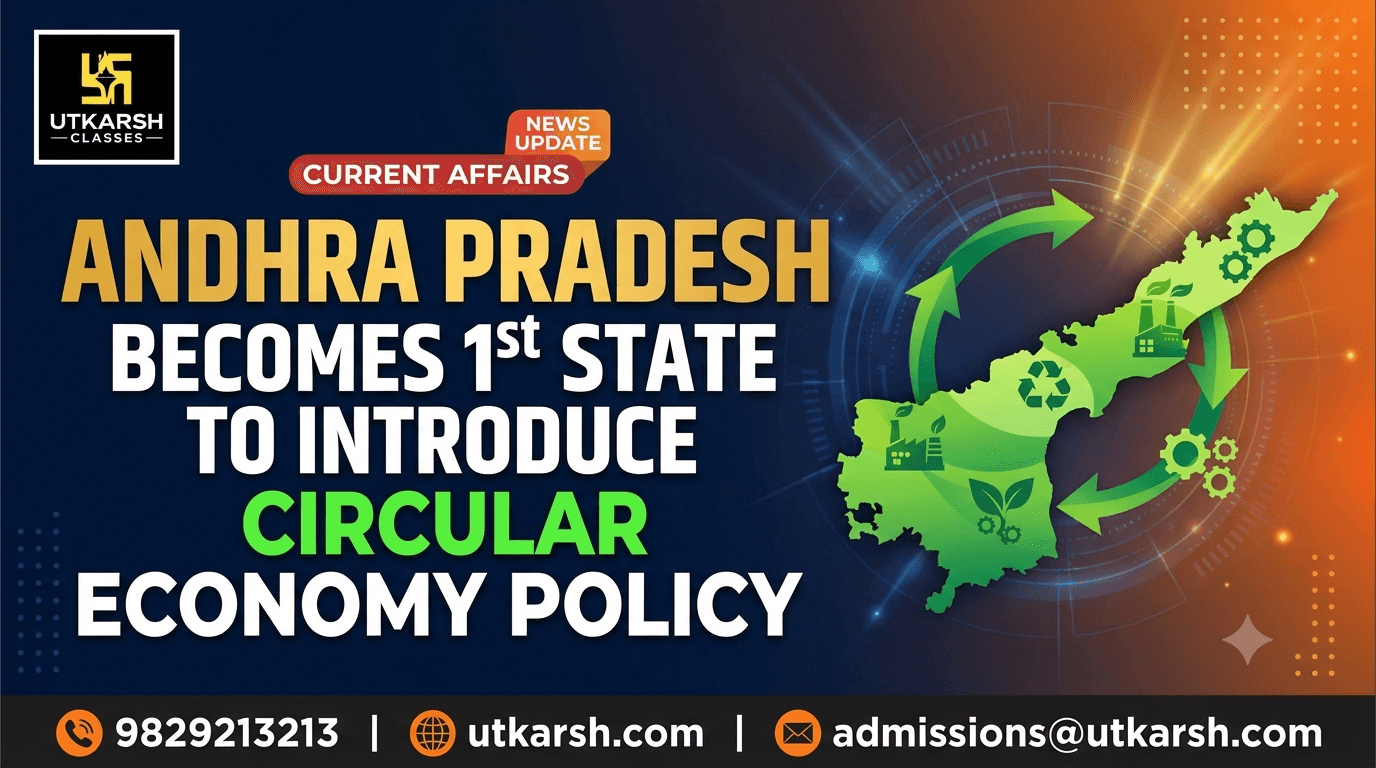
Andhra Pradesh has become the first State in India to introduce a dedicated circular economy policy. Swachh Andhra Corporation chairman Kommareddy Pattabhi Ram announced this development at the 3rd World Mayors’ Forum in Mumbai.
He said the State Government had introduced the policy under the leadership of Chief Minister N. Chandrababu Naidu. The policy aims to promote waste management, recycling and the efficient use of resources.
Pattabhi Ram also highlighted the importance of waste segregation at the source. He said people must separate different types of waste before disposal. This step helps recycling industries process waste more effectively.
He explained that recycling cannot succeed without proper waste segregation. The State Government is also attracting recycling industries through several incentives. These include land allocation, investment support, operational concessions, employment assistance and viability gap funding.
The initiative aims to create a sustainable waste management system. It also seeks to turn waste into useful resources and support economic growth.
Andhra Pradesh has taken an important step towards sustainable development by introducing its circular economy policy.
A circular economy reduces waste and keeps materials in use for as long as possible. It promotes the reuse, repair, refurbishment and recycling of products. This approach reduces the need to extract new raw materials.
The State's policy aims to encourage industries and businesses to adopt sustainable production and consumption practices. It also seeks to strengthen the recycling sector.
According to Pattabhi Ram, Andhra Pradesh has become the first Indian State to introduce this policy. He made the announcement while speaking on the theme of ‘Circular Cities’ at the 3rd World Mayors’ Forum in Mumbai.
The policy reflects the State Government's focus on sustainable urban development. It also connects waste management with investment, industrial growth and employment generation.
Pattabhi Ram stressed that waste segregation at the source forms the foundation of a successful circular economy.
Source segregation means separating waste where people generate it. Households, offices, shops and institutions should divide waste into suitable categories before disposal.
For example, people can separate wet waste, dry waste and domestic hazardous waste. This process helps waste collection agencies send different materials to suitable treatment and recycling facilities.
Pattabhi Ram emphasised that recycling cannot achieve its full potential without proper segregation. Therefore, public participation remains important for the success of the circular economy.
Andhra Pradesh is taking steps to attract investment in the recycling sector. The State Government is offering several forms of support to encourage industries to establish recycling facilities.
1. Land Allocation
The State is providing land to attract recycling industries. This support can help companies establish processing and recycling facilities.
2. Investment Incentives
The Government is offering investment-related incentives to encourage businesses to enter the recycling sector. These incentives can support industrial expansion.
3. Operational Concessions
The State is providing operational concessions to make it easier for recycling units to run their businesses.
4. Employment Support
The policy also focuses on employment support. Recycling industries can create jobs in waste collection, sorting, transportation, processing and resource recovery.
5. Viability Gap Funding
The Government is using viability gap funding to support projects that may face financial challenges. This support can help make important recycling projects financially feasible.
These measures aim to attract private investment and strengthen the State's recycling infrastructure.
A circular economy is an economic system that aims to reduce waste and use resources efficiently.
The traditional linear economy follows a ‘take-make-dispose’ model. Industries extract raw materials, manufacture products and sell them to consumers. People often discard these products after use.
A circular economy follows a different approach. It focuses on keeping products and materials in circulation for a longer period.
This model reduces waste generation and supports sustainable economic growth.
Indian cities generate large quantities of municipal solid waste. Rapid urbanisation, population growth and changing consumption patterns increase pressure on waste management systems.
A circular economy can help cities manage these challenges. It can also create economic opportunities.
1. Better Waste Management: Cities can reduce the volume of waste that reaches landfills.
2. Resource Conservation: Recycling and reuse can reduce demand for fresh raw materials.
3. Employment Generation: Recycling, repair and waste processing activities can create jobs.
4. Industrial Development: A strong recycling sector can attract investment and support new businesses.
5. Environmental Protection: Better waste management can reduce pollution and protect natural resources.
6. Sustainable Urban Development: Circular practices can help cities use resources more efficiently and improve urban living conditions.
Andhra Pradesh's policy seeks to connect these environmental and economic benefits through government support and private investment.
The 3rd World Mayors’ Forum took place in Mumbai. It provided a platform for discussions on urban development and city-level challenges.
During the programme, Pattabhi Ram spoke on the theme of ‘Circular Cities’. He highlighted Andhra Pradesh's circular economy policy and the importance of waste segregation.
The discussion placed attention on the role of cities in building sustainable waste management systems. Local governments, industries and citizens must work together to make circular economy practices successful.
Andhra Pradesh has taken a significant step towards sustainable development by introducing its circular economy policy. The State aims to strengthen recycling industries through investment incentives, land allocation, operational concessions, employment support and viability gap funding. However, public participation remains essential. Citizens must segregate waste at the source to support effective recycling. The policy seeks to turn waste into a valuable resource. It also aims to attract investment, create jobs and promote cleaner cities.
About the author

Girish Kumar
Current Affairs Content Writer
Girish Kumar is a current affairs content writer at Utkarsh Classes, with a decade of experience covering diverse contemporary issues. He develops high-quality study material for various competitive examinations, including UPSC, PSC, Bank PO etc.

Latest Current Affairs
Summit and Conference
27 November 2026
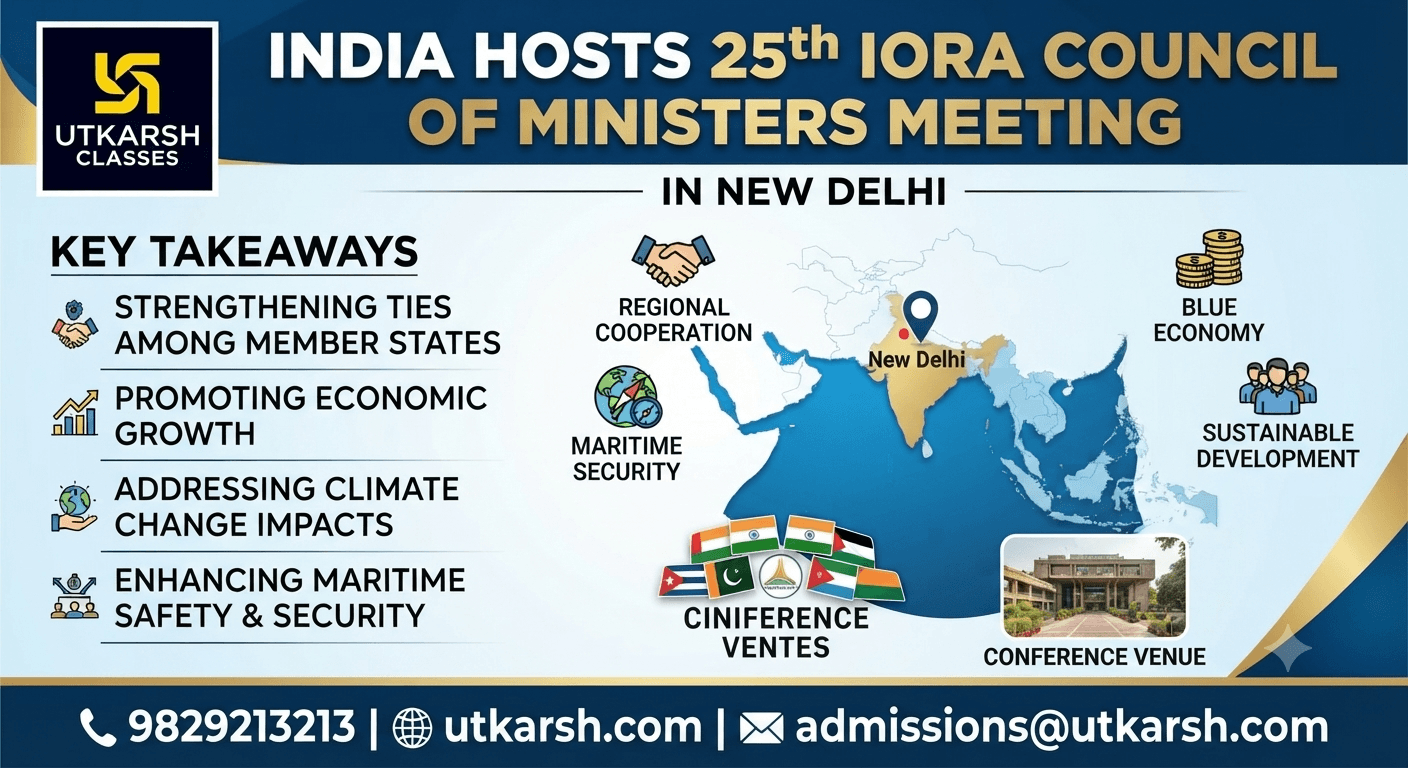
India Hosts 25th IORA Council of Ministers Meeting in New Delhi
Popular Tags
Economy
State news
Death
Person in News
Place in News
Himachal Pradesh
Uttrakhand
Art and Culture
Government Scheme
Science
Supreme Court
Tribe
Energy
Environment
Agriculture
Award and Honour
Uttar Pradesh
Supreme Court
Important Day
Transport
Science and Technology
Summit and Conference
Bill and Act
Haryana
Madhya Pradesh
Election
Industry
Infrastructure
Tourism
Government Initiative
Frequently asked questions

Visit Utkarsh Classes Offline Centre Near You.